New work, rare editions and monumental releases, sent before they appear here. A few times a year.
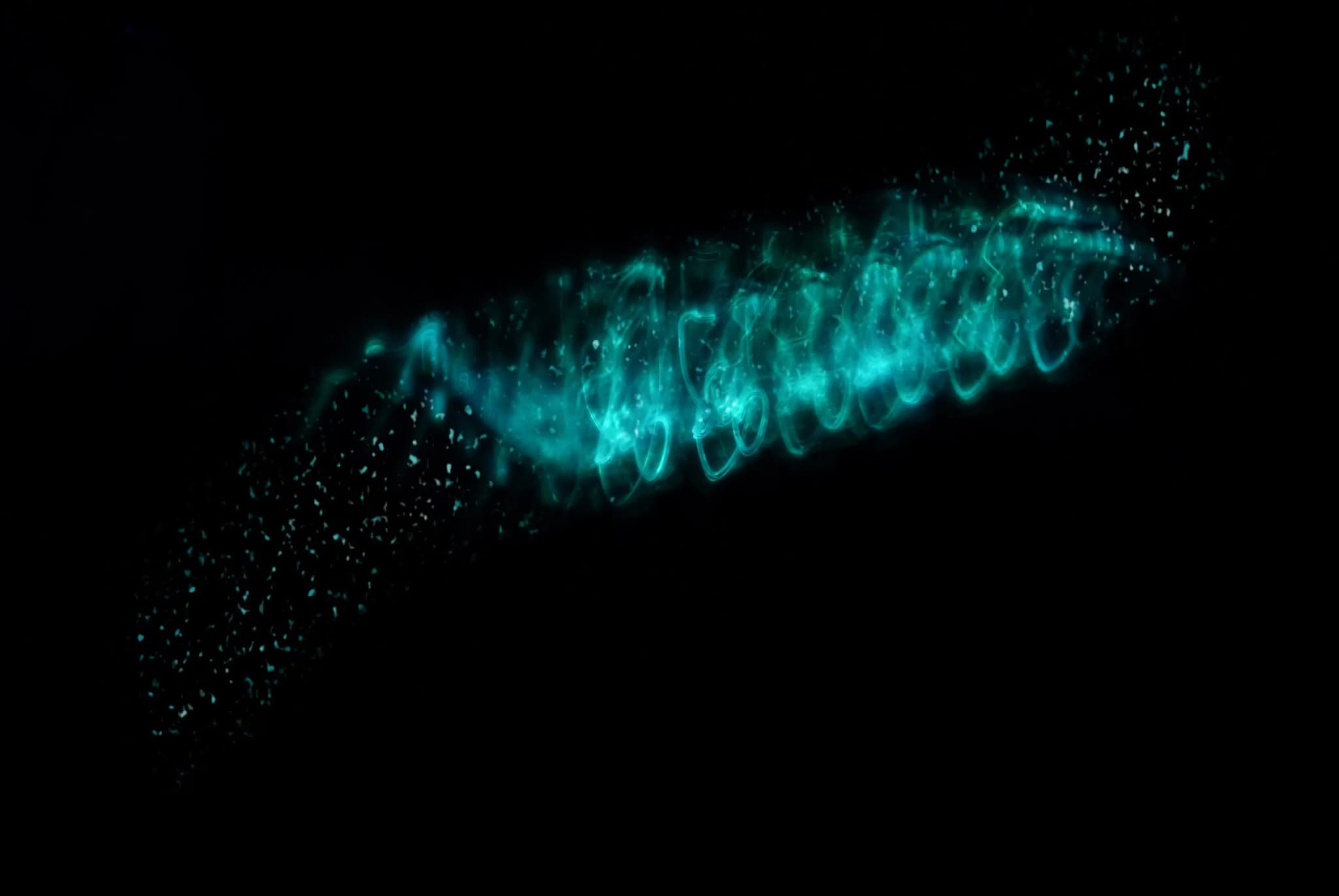
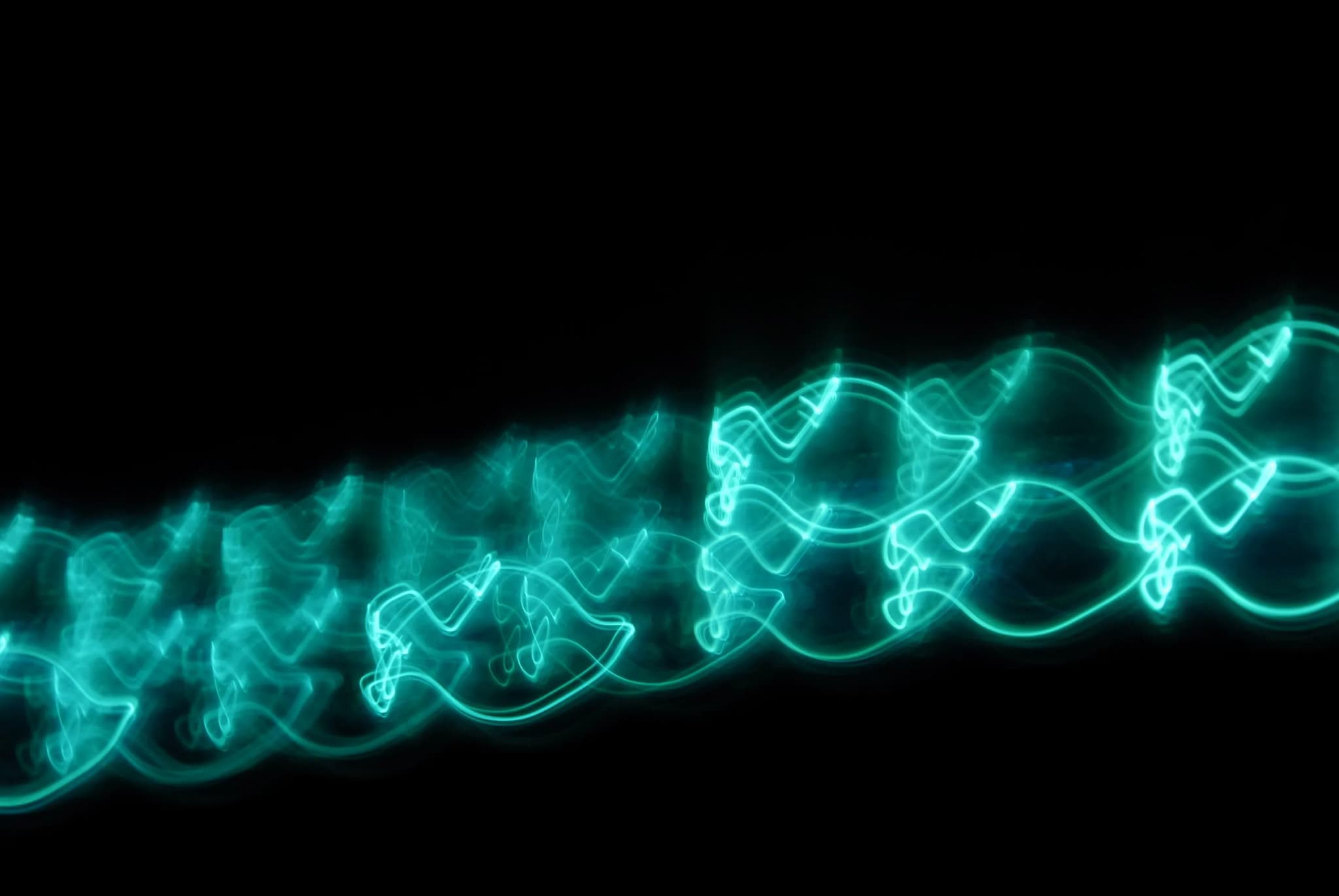
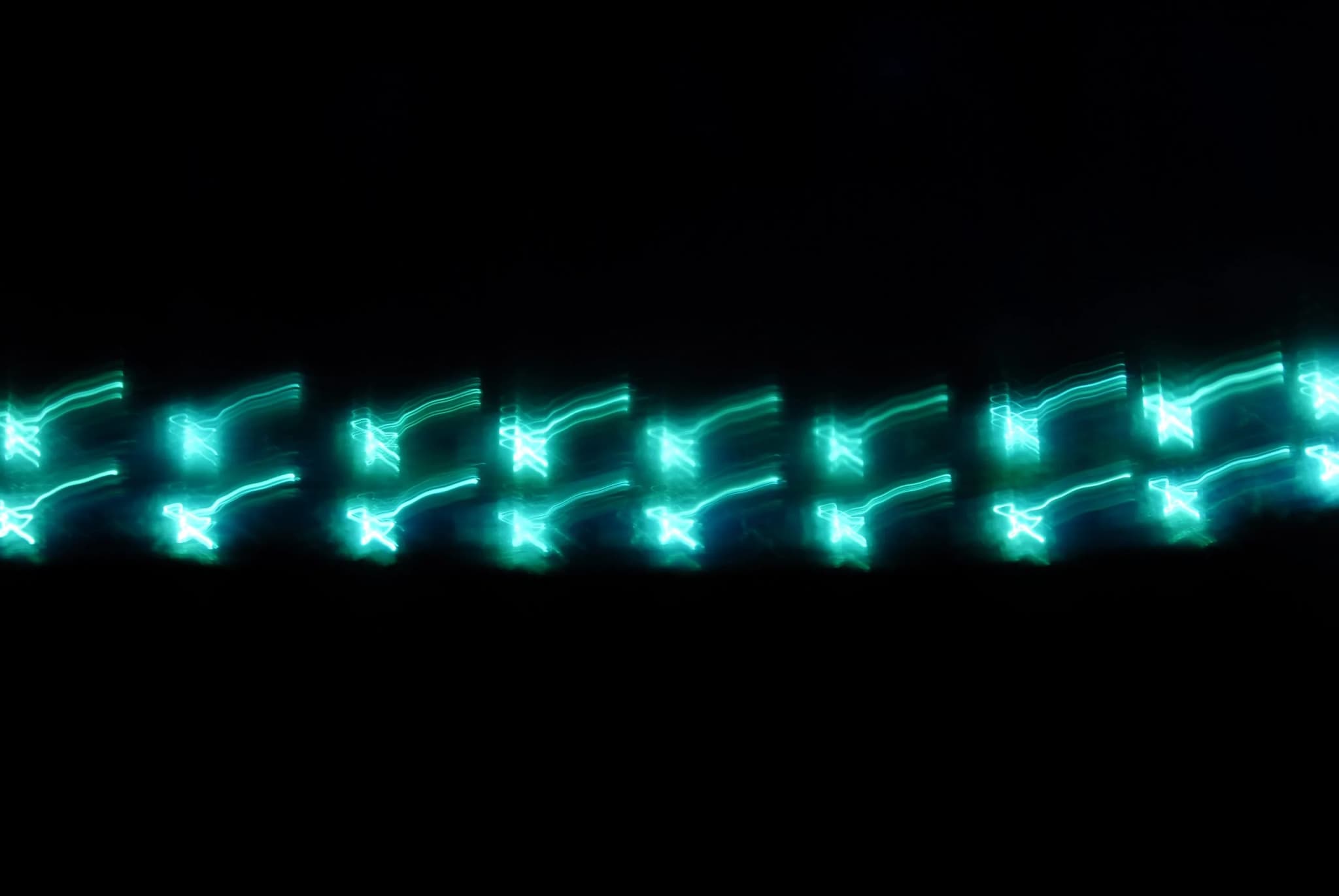
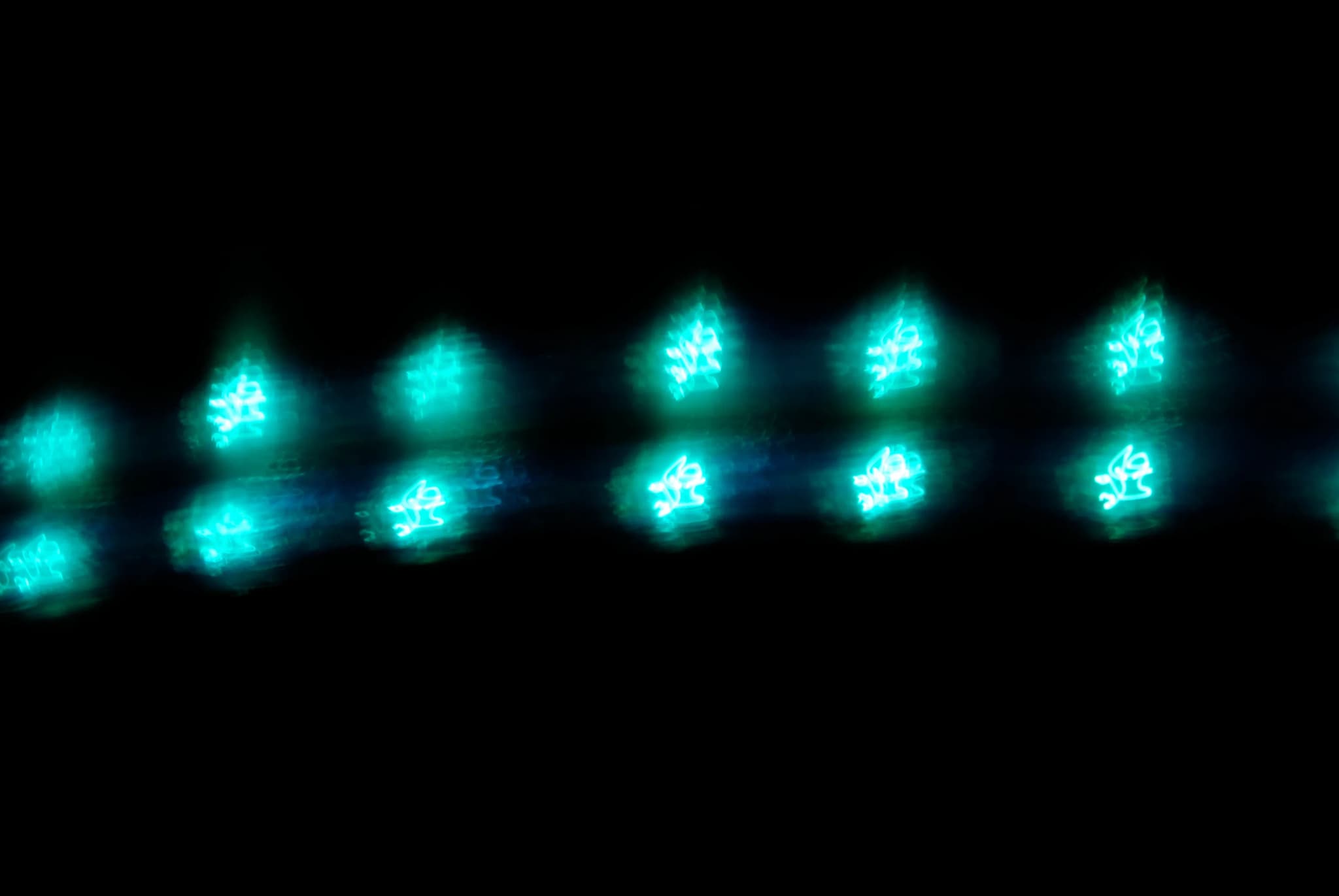
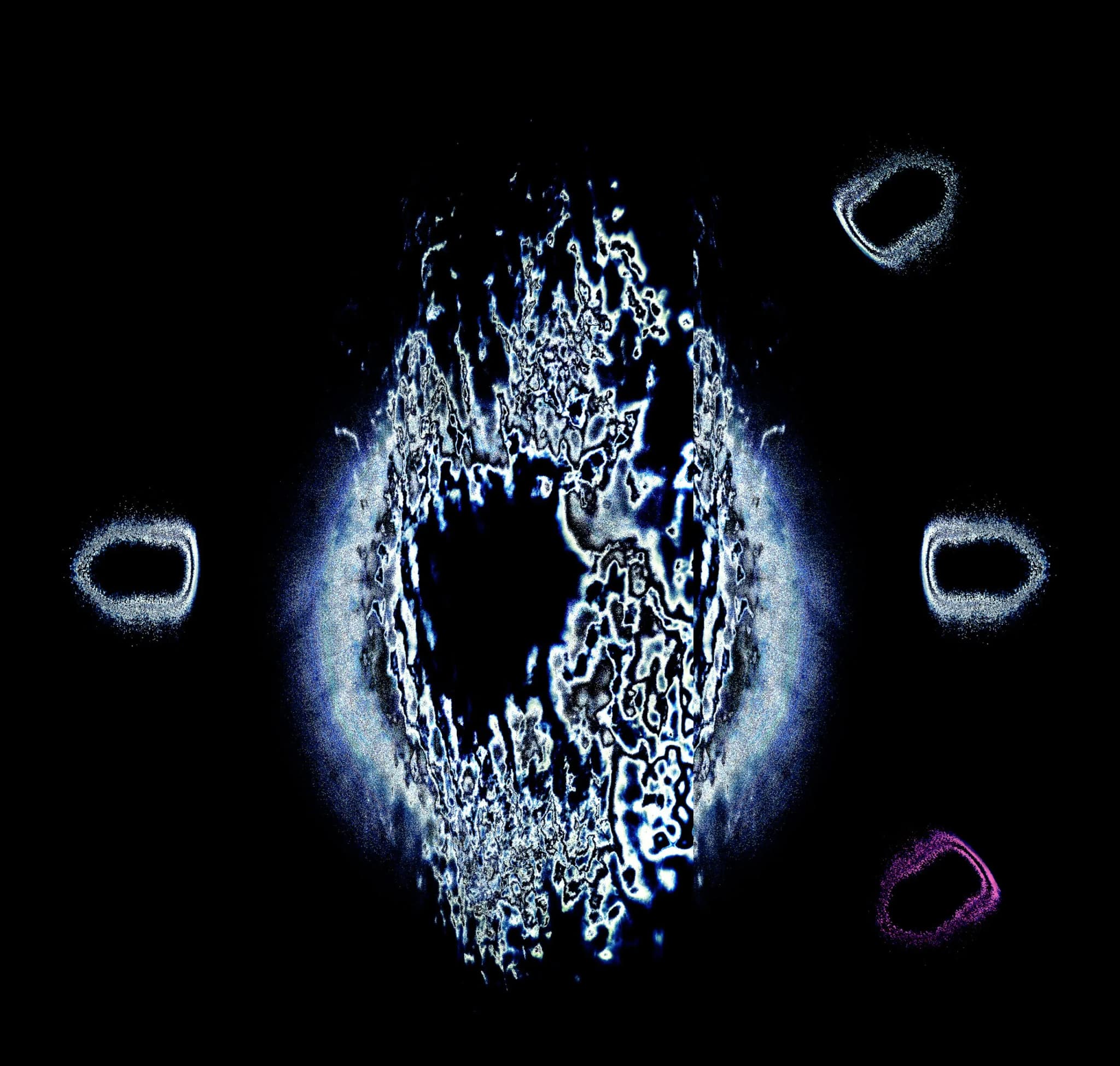
A thin line of cyan light on black: looping, swelling, breaking into particles. Drawn by moving light during a long exposure, not by hand.
I received them more than I made them.
01
About Quiet Voltage
In these works, I mostly follow.
I sit in something that moves. Somewhere else, a light moves too. With the shutter open, the camera becomes an imaginary sheet of paper, and the light draws across it.
The lines do not feel entirely mine. Cadence Line repeats like a rhythm. Low Frequency Tide and Ribbon of Voltage rise and swell. In Helix of Still Charge, the line loosens and breaks into particles.
I received them more than I made them. The whole series came quickly, from about forty exposures.
There is tension in these images: voltage, current, charge. But it lives somewhere different from the tension in Pressure Fields. There, pressure gathers in a body that holds its breath. Here, the charge stays outside me, carried by light. It moves, but it does not push. That is where the quiet comes from.